01What this video is
Two people on camera in a studio: a host telling a real-feeling story, and a doctor she brings in to explain the twist. The host opens with a woman named Helen whose cholesterol pill kept getting stronger while she felt worse and worse — then hands to the doctor, who reveals the thyroid connection her own cardiologist never looked for. The one job of this edit is to make a tired, dismissed 50-something woman feel like someone is finally telling her the truth — keep it calm, credible, and human, never hypey.
02Format & look
03Who it's for
She's in her fifties, on a statin for high cholesterol, and quietly worn down — tired all the time, foggy, her hair thinning. She's blamed all of it on getting older because that's what she's been told. She's been to the doctor, she's followed the rules, and she still doesn't feel like herself. She's smart and a little skeptical, so anything that smells like a sales pitch loses her instantly.
04Why it works (the vision)
05The hook — on-screen text
- Structure: a bold static hook box with the claim, plus a second box for authority/setup — the two-box claim+authority shape that won across the mined ads.
- Emoji: one that sparks emotion / urgency / curiosity (🚨 ⚠️ 😲 😳 😩) — never a neutral/informational one (📈, ➡️). Match it to the device.
- Type: big, clean, readable. Serious-authority tone (investigative / lab-coat), not a playful TikTok question.
- Reveal: claim lands first; the second line drops after — the loop snapping open.
Not a fixed 3 seconds. Each line stays up as long as the viewer needs to comfortably read it. Storyboard baseline: line 1 holds to ~4.5s, line 2 from ~5.2s to ~10s. Read-time is the floor — lengthen if a line needs it.

06On-screen text
Captions running the whole way through (she may be watching with the sound off). A bold hook line on screen for the first few seconds while the host opens on Helen. Keep caption styling clean and credible — readable white text, no carnival colors or hype emojis, because this viewer distrusts anything that looks like a pitch.
07Editing brief — pace, style, vibe
08Visuals — keep the eyes engaged
Faces are the spine of this edit — we mostly want to be on the host or the doctor, watching them talk. Inserts are seasoning, not the meal. Drop a visual in only on a concrete noun or a hard-to-picture idea, hold it for a beat, then cut straight back to the face. inserts: Inserts to drop in, synced to the line:
- "increased her statin three times in two years" -> a pill bottle, or a simple rising-dose graphic (the dose number ticking up)
- "her hands were going numb at night" / "her muscles ached" -> a quiet, real-feeling shot of hands, or a tired figure after a short walk
- "ran a panel her cardiologist had never run" -> a lab requisition / a thyroid panel sheet
- "the active form, T3, turns on the LDL receptors" -> a simple, clean diagram of the thyroid telling the liver to pull cholesterol out of the blood (this is the one big science visual — keep it elegant, not cartoonish)
- "Free T3. Free T4. Antibodies. Reverse T3." -> the four line items appearing on a panel checklist as she names them
- "Iodine... Selenium... Zinc... Copper..." -> the four minerals named on screen one at a time as the doctor lists them
- "in a liquid" / Kindled named -> the product, shown plainly and briefly
- "Kindled is at trykindled.com" -> the website on screen for the CTA
layouts: Layouts to use:
- Small bottom-center insert (the default — a quick visual under the talking face)
- Horizontal split-screen, speaker on top / visual on the bottom (good for the mechanism diagram while the doctor explains it)
- Full-frame B-roll only for the big beats (the thyroid-to-liver diagram, maybe the product reveal)
camera_moves: Two camera moves worth it:
- A slow push-in on the doctor as she delivers the reveal line — 'those three things, they connect.'
- A gentle push toward the host on the final direct-to-camera CTA, so the close feels personal.
09Speakers
Pick an ethnicity (face + matching voices) and a market. Image/voice prompts written for GPT Image 2 / Nano Banana Pro + ElevenLabs.
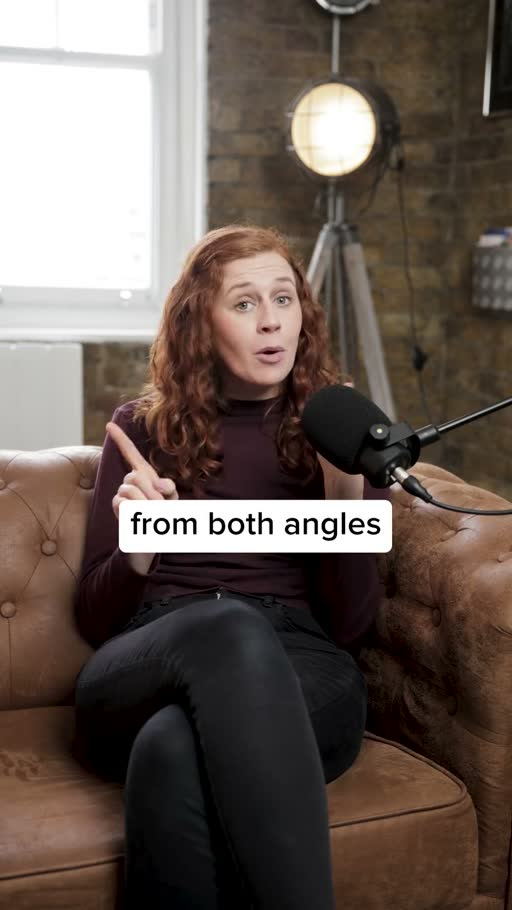
Medium-close shot of a white Caucasian woman with fair skin, light hazel eyes, and chin-length straight ash-brown hair with natural greys, parted to the side, in her Late 40s, Composed, credible, quietly intense — leans in for the confiding asides. Never hypey.. She is Seated, sit-down interview posture; leans in slightly on the aside moments. She wears Polished but understated — a dark blazer or simple smart top, nothing flashy. Background: Studio with an investigative feel: dark charcoal wall, a walnut bookshelf behind her, warm lamp-toned key light. Shot on an 85mm lens at about f/2.8 — natural, flattering portrait compression with a softly blurred background. Natural, unretouched skin with realistic texture and fine age-appropriate lines; believable documentary feel, photorealistic, sharp eyes with natural catchlights, true-to-life color.
Female, late 40s, documentary-newsroom delivery — measured, warm, authoritative; drops to a confiding near-whisper on the leaning-in asides. Accent / voice: General American, neutral broadcast register.
Female, late 40s, documentary-newsroom delivery — measured, warm, authoritative; drops to a confiding near-whisper on the leaning-in asides. Accent / voice: General American, warmer and more conversational.
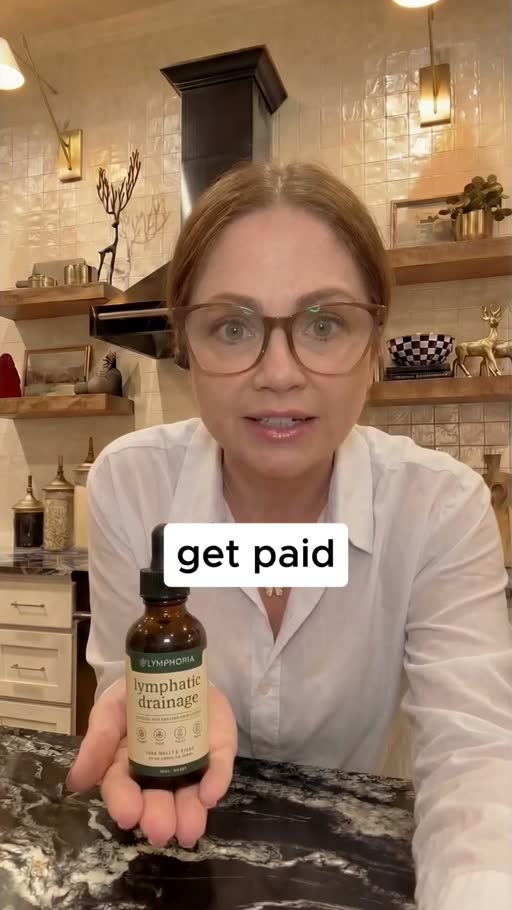
Medium-close shot of a white Caucasian woman with fair skin, light hazel eyes, and chin-length straight ash-brown hair with natural greys, parted to the side, in her 52, Warm-clinical, grounded, unhurried; speaks from experience ('that's the labs I run every week'). She is Seated for the interview, facing the host; settled and calm. She wears Soft professional — a clinician's look without a loud white-coat-and-stethoscope cliche; understated and real. Background: A soft, naturally lit office — gentle daylight, clinical but warm, not sterile. Shot on an 85mm lens at about f/2.8 — natural, flattering portrait compression with a softly blurred background. Natural, unretouched skin with realistic texture and fine age-appropriate lines; believable documentary feel, photorealistic, sharp eyes with natural catchlights, true-to-life color.Female, 52, warm-clinical voice — calm, precise, reassuring; explains complex things simply without sounding like she's reading. Accent / voice: General American, neutral broadcast register.
Female, 52, warm-clinical voice — calm, precise, reassuring; explains complex things simply without sounding like she's reading. Accent / voice: General American, warmer and more conversational.
10Comp inspiration — pick what fits (you won't use it all)
A menu, not a checklist — these are the strongest references for this ad. Borrow the technique that serves it and leave the rest; one video won't (and shouldn't) carry all of them.
11Script
Clean spoken dialogue — copy-ready.
Helen's cardiologist increased her statin three times in two years. Three times. The LDL came down, a little. Then it came back up. He doubled the dose. Then he doubled it again. And every visit she'd tell him: I feel worse. I'm tired. My memory's slipping. My hair's thinning. And every visit he'd nod, write the new dose, and say: keep taking it.
Her hands were going numb at night. Her muscles ached after the smallest walk. "Side effects," he said. "Most patients tolerate it fine." But Helen wasn't tolerating it fine. And she wasn't the only one.
So she went to see a functional endocrinologist who ran a panel her cardiologist had never run. Tell them what you found.
Her T3, the active form of thyroid hormone, was at the very bottom of the range. Her TSH was "normal." Her LDL was high. And those three things, they connect. See, your thyroid hormone tells your liver how to clear cholesterol. The active form, T3, turns on the LDL receptors that pull cholesterol out of your blood. When T3 is low, and most women her age running fatigue and fog have low T3, the receptors slow down. LDL piles up. The doctor sees the number. Prescribes a statin. The statin doesn't fix the thyroid. So the LDL stays high. The dose goes up. And, here's the cruel part, the side effects of statins, muscle pain, fatigue, brain fog, overlap exactly with the thyroid symptoms nobody checked.
So she had both. Compounding.
She had both. Compounding.
Helen didn't stop her statin. She didn't change anything overnight. She brought the labs to her cardiologist and said: I'd like a full thyroid panel before we increase this again.
Free T3. Free T4. Antibodies. Reverse T3. That's what a thyroid panel actually looks like. TSH alone misses it. Insurance often won't pay for the others, you ask anyway. Your doctor's hands are tied; yours aren't.
Your thyroid needs four things to make and use its hormone correctly. Iodine, the raw material. Selenium, the switch that turns the storage form into the active form. Zinc, what lets that active form actually dock into your cells. Copper, the balancer. Most women in their fifties are running low on at least three of those. That's not a marketing pitch. That's the labs I run every week. That's what's in Kindled. The four minerals at disclosed clinical doses, in a liquid that bypasses the slow gut hypothyroidism causes. Plus an Ayurvedic adaptogen blend. Ashwagandha, Holy Basil, Schisandra, because stress is what flips conversion the wrong way, and women on statins are already in the stress loop.
Will this lower her cholesterol?
Kindled won't pull her LDL down. Kindled won't replace her statin. What it can do is give her thyroid what it needs to do the conversion her body's been short on. Whether that shifts her labs, that's her doctor's call, with the real numbers, over the next year. It works alongside what's already working. Not instead of.
If you're on a statin and the dose keeps going up, and the muscle pain and the fog don't add up to "you're just getting older" ask for a full thyroid panel. Not just TSH. The whole picture.
And if you want to give your thyroid what the biology says it needs while you and your doctor sort it out. Kindled is at trykindled.com. Especially if you have Hashimoto's, talk to your doctor about iodine before starting anything new. Adjunct to your prescription. Always.