01What this video is
A two-chair podcast conversation. A curious host asks the questions a hair-thinning woman is asking in her own head, and a calm, credentialed expert answers them one at a time, building to a real explanation. The one job of the edit is to make a 50-something woman who's been told 'your labs are fine' feel like someone finally believes her — then carry her, answer by answer, to the close without ever feeling sold to. Keep it feeling like an honest interview, not an ad.
02Format & look
03Who it's for
A woman in her fifties whose hair is thinning — shedding in handfuls, the part down the middle getting wider — who went to her doctor, got her thyroid tested, and was told everything's normal. She doesn't feel normal. She's tired, she feels dismissed, and she's quietly sure the lab result isn't telling the whole story. She's heard 'just take this supplement' a thousand times and stopped believing it.
04Why it works (the vision)
05The hook — on-screen text
- Structure: a bold static hook box with the claim, plus a second box for authority/setup — the two-box claim+authority shape that won across the mined ads.
- Emoji: one that sparks emotion / urgency / curiosity (🚨 ⚠️ 😲 😳 😩) — never a neutral/informational one (📈, ➡️). Match it to the device.
- Type: big, clean, readable. Serious-authority tone (investigative / lab-coat), not a playful TikTok question.
- Reveal: claim lands first; the second line drops after — the loop snapping open.
Not a fixed 3 seconds. Each line stays up as long as the viewer needs to comfortably read it. Storyboard baseline: line 1 holds to ~4.5s, line 2 from ~5.2s to ~10s. Read-time is the floor — lengthen if a line needs it.

06On-screen text
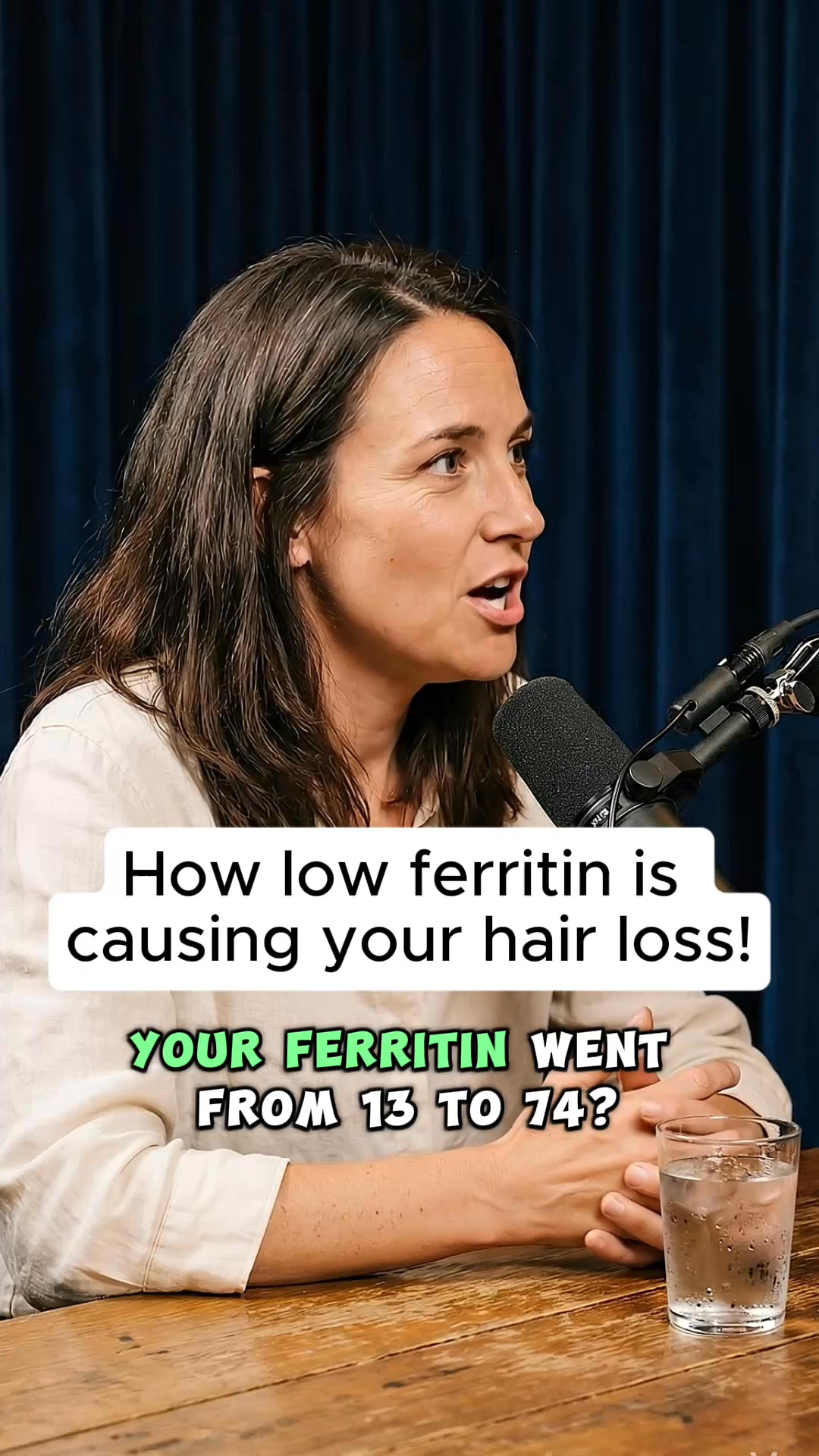
Captions running the whole way through (this carries the video when someone watches with the sound off — non-negotiable for two people on camera, because no single face holds the frame and most people scroll muted). Open on bold hook text on top of the first shot: HER LABS WERE 'NORMAL.' HER HAIR WASN'T. Drop in a couple of short, plain lower-thirds on the two big teaching moments (the storage-vs-active hormone idea, and the two minerals) — keep them under about six words so they're glanceable, never a wall of text.
07Editing brief — pace, style, vibe
08Visuals — keep the eyes engaged
Faces are the spine of this — most of the runtime is the two of them talking, and the trust is built on their expressions. Inserts are seasoning: drop them in on the concrete nouns, hold for a beat, then cut straight back to faces. Never let an insert pull us away from the conversation for long.
Inserts to drop in, synced to the line:
- "her standard test doesn't even measure" -> a quick shot of a lab report / bloodwork printout with everything reading 'normal' (the thing she's been handed)
- "makes a storage hormone — T4 ... converted into the active form ... T3" -> a dead-simple two-box diagram, storage turning into active (clean and plain, not a science lecture)
- "hair follicles ... go dormant ... the part that widens down the middle" -> a brief, tasteful follicle-going-dormant graphic, or a subtle hair-part insert — keep it gentle, this is her pain
- "the two minerals it takes ... selenium and zinc" -> a simple on-screen pairing of the two minerals as he names them
- "the baby hairs were coming back along her part" -> nothing literal needed — stay on the expert's face here; the words do the work
- "the one I use with patients is called Kindled ... the liquid kind" -> the product, the dropper/liquid bottle, held naturally or as a clean closing insert
Layouts to use:
- Small insert riding bottom-center / lower-third over the speaker (the default — keeps faces on screen)
- Horizontal split-screen, speaker on top / the visual on the bottom (for the hormone diagram and the back-and-forth handoffs)
- Full-frame B-roll only on the big beats (the lab report at the open, the product at the close)
Two camera moves worth it:
- A slow push-in on the expert during the reveal line — 'the active hormone, the one her follicles need, is running low' — to land the gut-drop
- A gentle push-in on the expert through the patient story and into the CTA, so the close feels personal and earned, not like a hard pivot to a pitch
09Speakers
Pick an ethnicity (face + matching voices) and a market. Image/voice prompts written for GPT Image 2 / Nano Banana Pro + ElevenLabs.
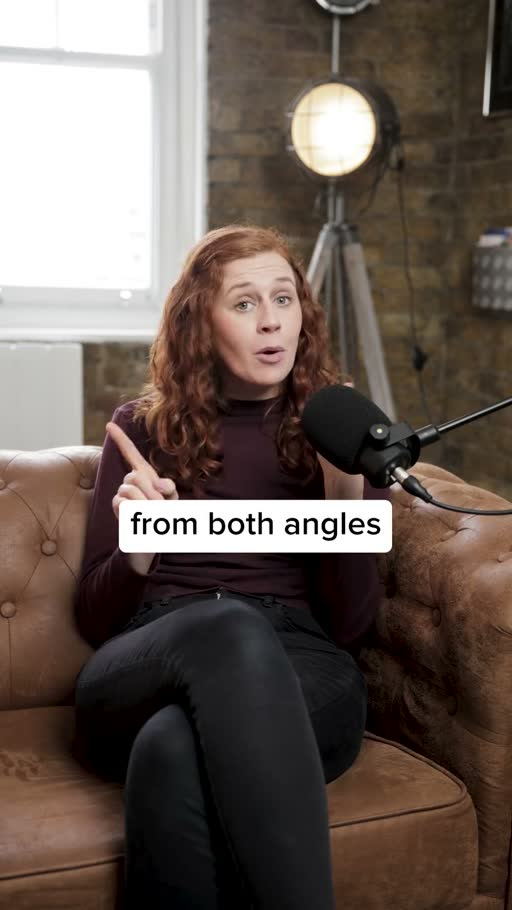
Medium-close shot of a white Caucasian woman with fair skin, light hazel eyes, and chin-length straight ash-brown hair with natural greys, parted to the side, in her 30s–40s, Curious, warm, a little skeptical on the viewer's behalf — genuinely interested, easy to like. She is Seated in the studio chair, leaning in toward the expert, eyeline to the expert, reacting as he listens. She wears Smart-casual — a clean shirt or a casual jacket, podcast-host relaxed, nothing flashy. Background: Clean podcast studio, two chairs, warm-neutral two-point lighting. Shot on an 85mm lens at about f/2.8 — natural, flattering portrait compression with a softly blurred background. Natural, unretouched skin with realistic texture and fine age-appropriate lines; believable documentary feel, photorealistic, sharp eyes with natural catchlights, true-to-life color.
Conversational peer — curious and easy, the way you'd talk to a friend who knows something you don't; voices the doubt without sounding combative Accent / voice: General American, neutral broadcast register.
Conversational peer — curious and easy, the way you'd talk to a friend who knows something you don't; voices the doubt without sounding combative Accent / voice: General American, warmer and more conversational.
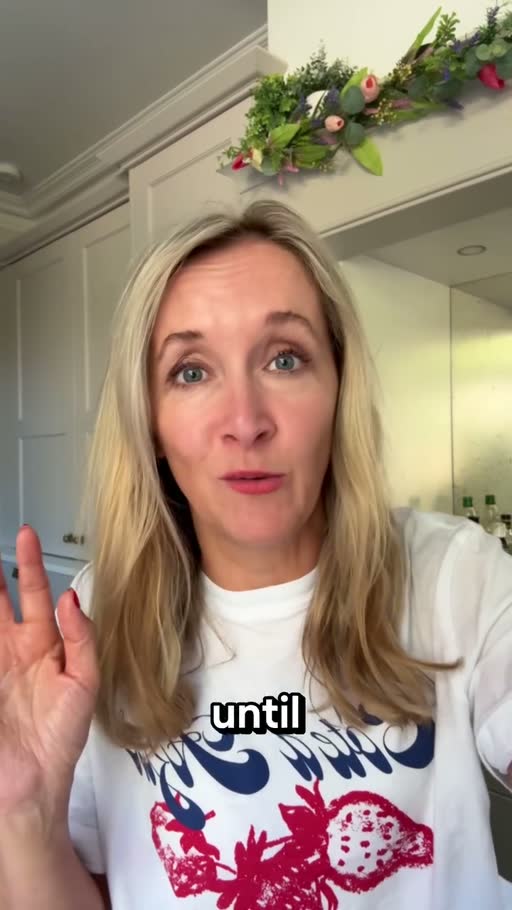
Medium-close shot of a white Caucasian woman with fair skin, light hazel eyes, and chin-length straight ash-brown hair with natural greys, parted to the side, in her 45–52, Measured, warm, authoritative without being cold — the kind of practitioner who tells you the truth even when it's not the easy answer. She is Seated across from the host, eyeline to the host, calm and grounded; holds the product naturally near the close. She wears Professional but approachable — a blazer or a clinician's smart-casual layer, credible, warm-toned, not a white coat. Background: Same podcast studio, two chairs, warm-neutral two-point lighting. Shot on an 85mm lens at about f/2.8 — natural, flattering portrait compression with a softly blurred background. Natural, unretouched skin with realistic texture and fine age-appropriate lines; believable documentary feel, photorealistic, sharp eyes with natural catchlights, true-to-life color.
Calm clinical warmth — a seasoned practitioner who simplifies without dumbing down, slows down on the honest admissions, and speaks to the woman watching like she's a patient she respects Accent / voice: General American, neutral broadcast register.
Calm clinical warmth — a seasoned practitioner who simplifies without dumbing down, slows down on the honest admissions, and speaks to the woman watching like she's a patient she respects Accent / voice: General American, warmer and more conversational.
10Comp inspiration — pick what fits (you won't use it all)
A menu, not a checklist — these are the strongest references for this ad. Borrow the technique that serves it and leave the rest; one video won't (and shouldn't) carry all of them.
11Script
Clean spoken dialogue — copy-ready.
Okay, so a woman's losing her hair. Handfuls of it. But her doctor says her thyroid's fine. Her labs are normal. What's actually going on there?
Her follicles are running out of fuel. And the fuel is a form of thyroid hormone her standard test doesn't even measure.
Wait, doesn't measure? How is that even possible?
So here's the part most women never get told. Your thyroid makes a storage hormone. T4. Your cells, your hair follicles, can't actually use that one. It has to get converted into the active form first. T3. And the standard test mostly measures the storage one.
So the report can say normal,
, while the active hormone, the one her follicles need, is running low. Exactly. The paper looks fine. Her body knows it isn't.
Man. I think a lot of women are sitting there feeling exactly that, fine on paper, falling apart for real.
And why does it show up in the hair before anywhere else?
Because hair follicles are some of the hungriest cells you've got. When that active hormone drops, they go dormant, they stop growing early. The hair you have sheds, and the new growth doesn't come in behind it. That's the drain. That's the part that widens down the middle.
So what makes the conversion fail in the first place?
Usually she's low on the two minerals it takes to make it happen, selenium and zinc. After twenty-four years, I can tell you most women over forty are.
Okay, but I have to ask, is this just take a supplement and your hair grows back? Because women have heard that a thousand times.
No, and I'd be careful with anyone who promises that. It won't work for everyone. What it does is give the body the raw material to do its own conversion, alongside whatever her doctor already has her on, not instead of it. And honestly, if she's got the autoimmune kind, she should talk to her doctor about iodine first.
Have you actually watched it help someone?
I had a patient last year, labs perfect for years, hair thinning the whole time. We ran the full panel, got the right nutrients in. A few months later she told me the baby hairs were coming back along her part. It wasn't overnight. But it came. So if that's you, ask your doctor for the full panel, not just the one number. And give your thyroid the nutrients it's missing. The one I use with patients is called Kindled, it's in the link, the liquid kind, because a slow thyroid doesn't absorb pills well. Right alongside your prescription.
Full panel. Feed the thyroid. Love it.